How monitoring of atom bomb tests can reveal timing of moss dispersal!
Methods based on DNA detection for monitoring environmental changes are increasingly employed in nature protection. This is called environmental DNA, eDNA for short. For example, it is possible to extract trace amounts of DNA from air, soil, or water and thereby assess which organisms are present at a given time.
Although eDNA is not a primary objective of the Bryomolecules project, it contributes to increasing the amount of DNA sequence data available in public databases. The more high-quality DNA sequences available for identified species, the more accurately the eDNA can be identified to species level.
We recently published an article that demonstrates how eDNA can reveal shifts in the annual timing of wind-carried dispersal agents (spores) of mosses and liverworts.
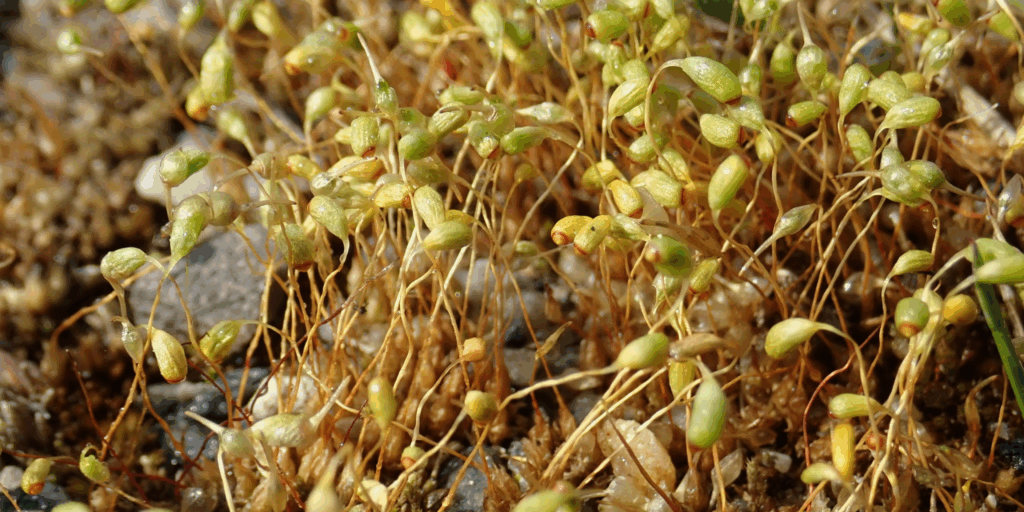
Picture 1: Funaria hygrometrica produces numerous pear-shaped sporophytes.
It is a colonist on burnt places after bonfires or forest fires.
The study of life history events linked to the annual cycle of light and climate is called phenology. The phenology of bryophytes is understudied. One reason is that spores of different species are similar and therefore impossible to identify in a microscope when captured from air samples.
In eDNA monitoring, a common problem is the difficulty of finding historical samples for comparison with the current situation. In this study, we used a somewhat unexpected historical archive!
The researcher Per Stenberg at Umeå University took advantage of the fact that radioactive fallout has been analysed from air samples filtered through glass fibre sheets at several stations across the country since the 1960s to monitor atomic bomb tests. These sheets are exchanged and examined weekly and then stored permanently. Per extracted DNA from a selection of these sheets, spanning every second year from 1974 to 2008, from the northernmost sampling station close to Kiruna in northern Sweden.
As a fair amount of the identified DNA traces came from spores of mosses and liverworts (bryophytes), we started a collaboration project. A bryophyte ecologist, Fia Bengtsson, was recruited to analyse the data. We focused on the timing of spore release for 16 species or groups of species, which could be accurately distinguished using existing DNA databases.
The results were remarkable – the bryophytes proved to have responded quickly to climate change. The annual start of spore release had advanced by 4 weeks, and the spore release culminated 6 weeks earlier during the 35-year investigation period, with some variation between species.
We first investigated whether the differences were associated with snowmelt timing or temperature increases during the year of spore release, but did not find a clear connection. Instead, it turned out that the timing change was strongly linked to higher autumn temperatures the previous year. The development time of the structures that produce the spores (sporophytes) differs a lot between species, but it appears that, in general, the sporophytes are able to proceed longer in their maturation process in the autumn, before winter sets in. As a result, they get a head start next year and release the spores earlier.
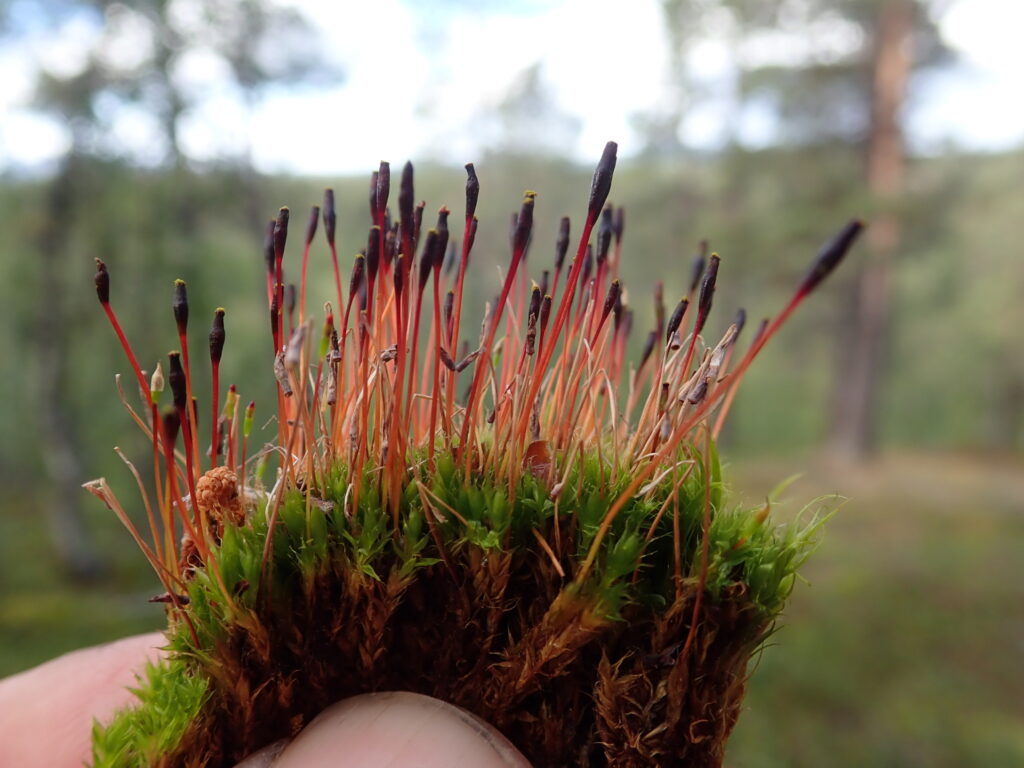
Picture 2: Tetraplodon mnioides is a species that grows on carcasses and droppings. Its brightly coloured sporophytes smell like rotten meat and attract flies that transport the spores to fresh substrates. The spores can also be transported by wind.
It is well known that climate change is more pronounced at higher latitudes, and Kiruna is well north of the Polar Circle. Our data show one aspect of how this affects nature: Bryophytes are strongly dependent on both temperature and precipitation for their development and community assembly.
The observed changes are indicative of changes taking place, perhaps with a delay, in other plants and animals as well…
Article written by Nils Cronberg
Pictures taken by Nils Cronberg