Inclusion of 40+ axenic liverwort accessions to the bryophyte culture collection
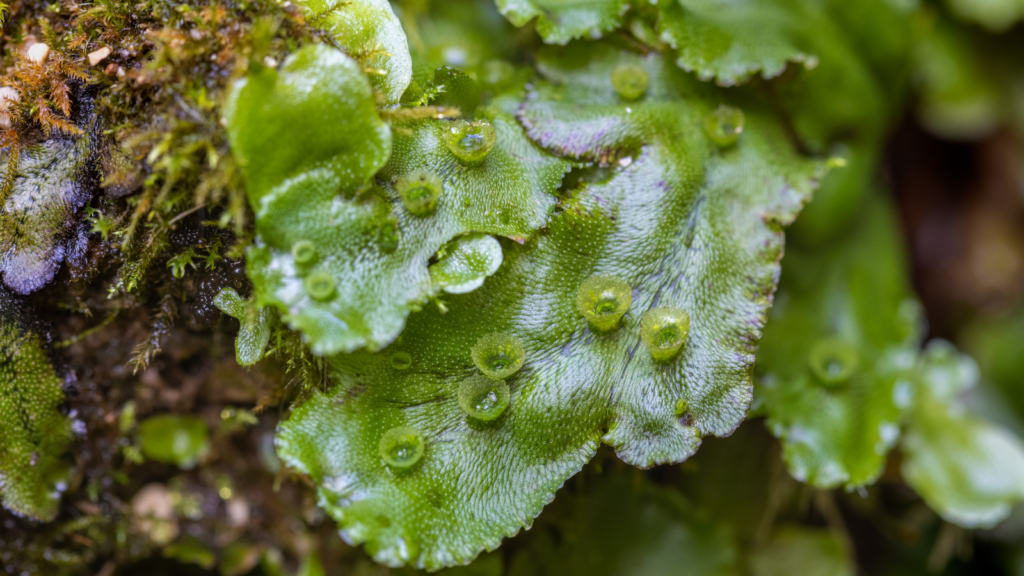
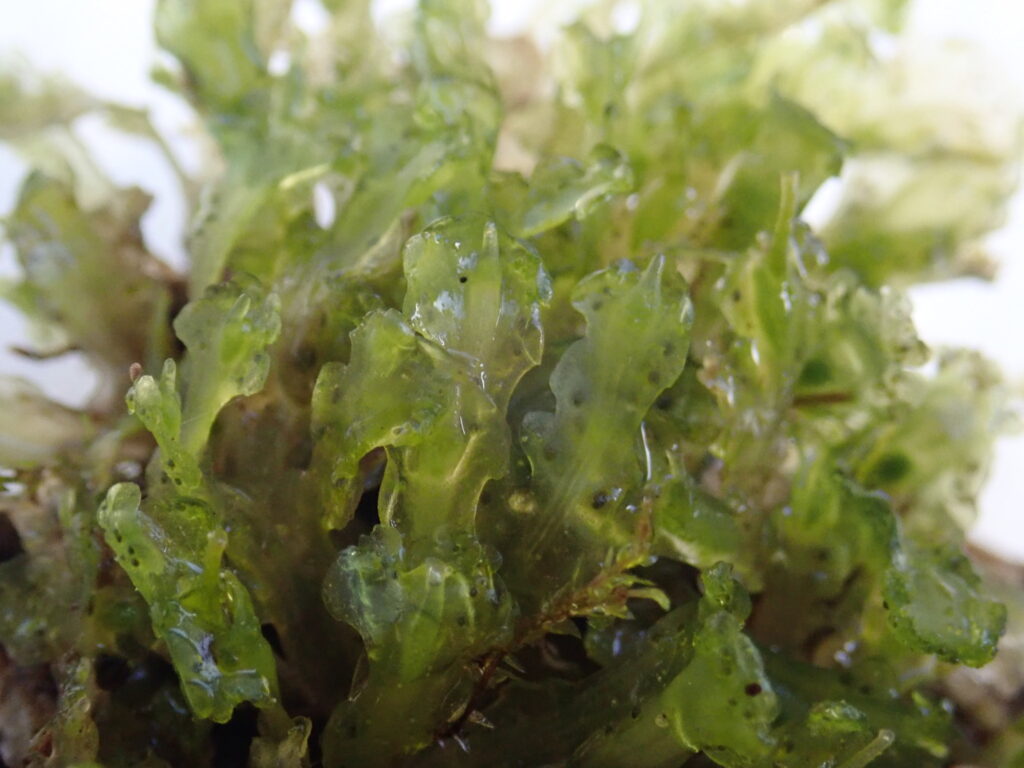
Our partners at Lund University (Lunds Universitet) have established axenic cultures of 50 moss accessions and 50 liverwort accessions, which will serve as the foundation for many of the project’s downstream studies. The selected accessions collection represents a wide diversity of liverwort and moss species, with most of the plant material collected in Sweden, with additional samples gathered in Iceland, the Faroe Islands, and Italy.
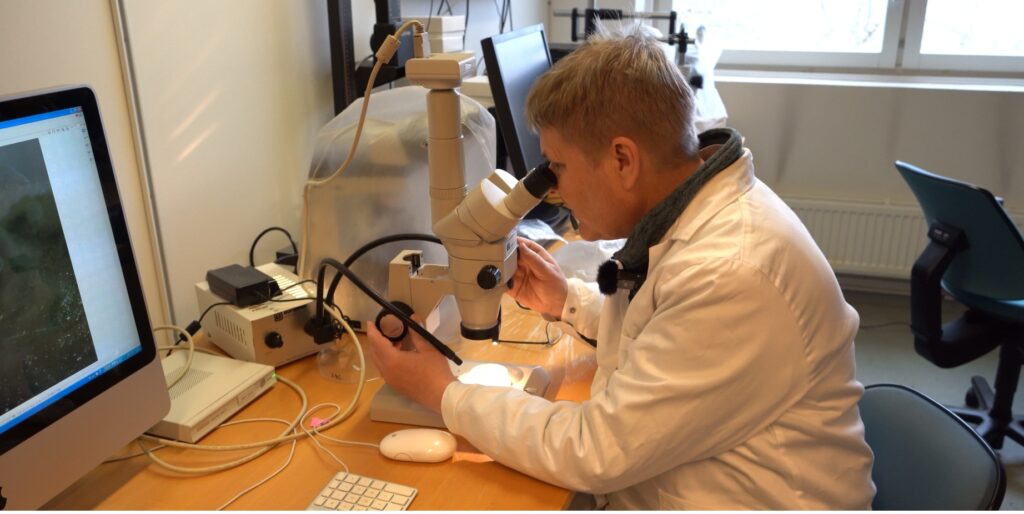
Examining liverwort samples in the lab at Lund University
Establishment of Sterile Accessions
Sterile accessions have been achieved by surface sterilisation of either sporophytes or vegetative plant material with a 0.05% solution of Sodium Dichloroisocyanurate for 1-2 minutes, followed by washing with sterile deionised water. Accessions are maintained on Petri dishes with 1% agar in a medium as described by Rudolph et al. (1988). The medium was 2 times the original formulation with an addition of 12 mg of the fungicide Benomyl per litre to reduce the risk of fungal contamination. If needed, samples have been treated to eliminate infections by cyanobacteria using the antibiotic erythromycin. Collections are maintained in a culture room under artificial LED-tube light, 16/8 day/night cycles and a mean temperature of 20° C.
Overview of Taxonomic Diversity
The collection contains a wide range of liverworts, including both thallous species and leafy liverworts. Taxon names are provided according to Hodgetts et al. (2020). Eventual synonyms, mostly older names still commonly occurring in liverwort floras, are listed in a separate column. The column “Source” indicates whether the accessions have been obtained from spore cultures or from sterilized vegetative tissue.