Pioneering studies of bryophyte exudates
In recent years, it has become evident that trees and flowers engage in intense and highly important underground interactions with microbes, fungi, and other plants. This is brought about by the exchange of specialised chemicals in the root zone, adjacent to their tiniest roots. Such interactions involve chemical signalling, exchange of nutrients, as well as exudation of substances to defend against antagonistic organisms and pests.
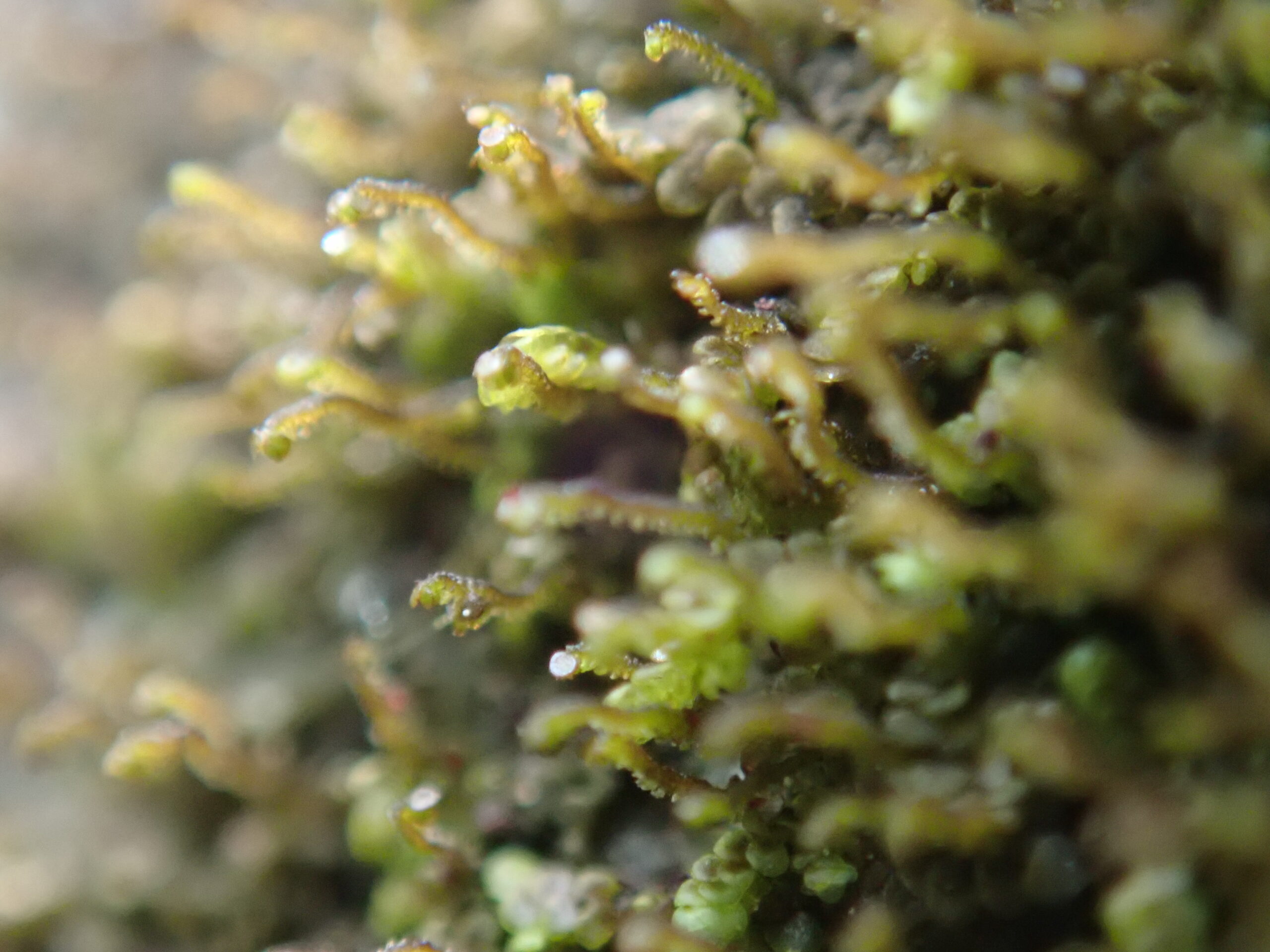
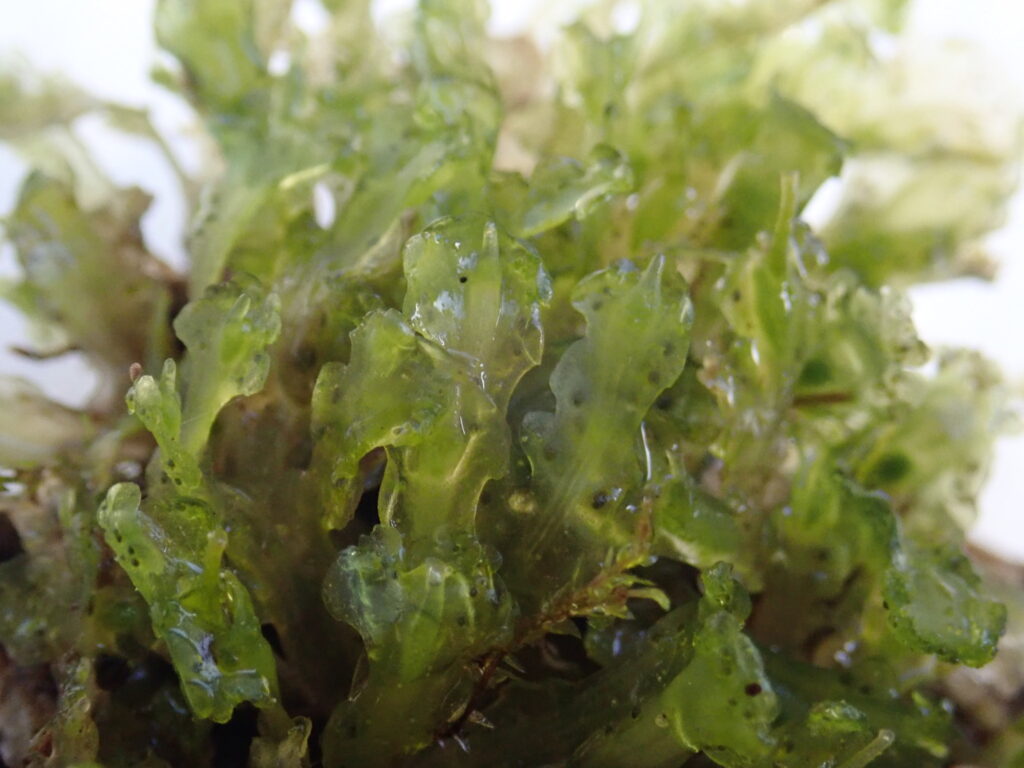
Bryophytes have no roots, so no root zone. Instead, they exude substances through their stems and leaves, which are much more delicate and leakier than the corresponding organs in other plants. Such interactions are a kind of blind spot in bryophyte research; most studies of their chemical composition have been carried out on extracts from crushed tissue. In Bryomolecules, we are looking at both substances contained within stems and leaves and exudates actively excreted to the ambient world.
In our cultures, the exudates become visible after some time as they stain the growth substrate (agar) yellowish or brownish. We know for sure that these substances emerge from the bryophytes, as the cultures are sterile. In nature, these substances are washed down into the soil by rain. In our closed cultures, the exudates also accumulate by evaporation on the top shoots, which is detrimental to the bryophytes themselves, to the extent that they start to die off after a prolonged time. When we rinse the cultures in clean water, the exudates are dissolved and removed, allowing the plants to recover again.
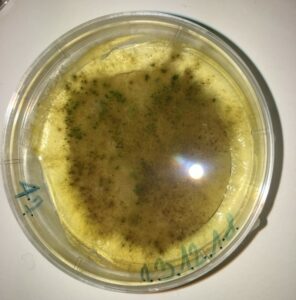
Figure: Agar plate with the moss Dicranum polysetum. Spore culture with many sporelings after one year of cultivation, the culture medium was exchanged once. The agar is stained yellow, and the circular polyacrylamide net, which enables transfer of the whole sample to anew medium, is stained even more.
The cocktail of exudates could, to some extent, include waste products that the bryophytes simply try to get rid of, but we know that they contain potent substances that could prevent germination of propagules (seeds and spores) from other plants. There are also substances that protect bryophytes from bacterial and fungal attack. Maybe, future substitutes for current-day antibiotics will come from bryophytes, releasing us from the current dilemma with bacterial resistance. Some bryophytes even exude substances that attract and encourage the growth of blue-green bacteria, which fix nitrogen from the air, providing essential nutrients to the plant and eventually circulating to the whole forest ecosystem.
At large, the study of bryophyte exudates is in its infancy, so we are doing pioneering work in Bryomolecules. New knowledge about moss exudate chemistry generated in the Bryomolecules project can provide the society with useful chemicals as well as new insights in ecosystem functioning.
Author: Nils Cronberg, Senior Lecturer at Biodiversity and Evolution – Lund University